![idealdata_logo_png.png]](https://support.idealdata.io/hs-fs/hubfs/idealdata_logo_png.png?height=50&name=idealdata_logo_png.png)
This release sharpens what IdealData watches and how merchants act on it. Every data page in the platform now opens with two numbers: how many things need attention, and how much revenue is at stake. The same pattern now applies consistently across Customers, Orders, Carts, and Products. The HubSpot integration is generally available with self-serve setup, enabling B2B sales rep notifications, in-line call actions, and one-click navigation to live records across Adobe Commerce, Shopify, and HubSpot. Low Stock Warning signals also became more accurate with support for per-SKU lead times.
"Needs Attention" with revenue at risk, on every page
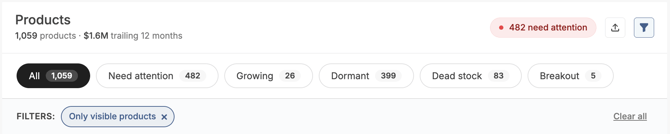
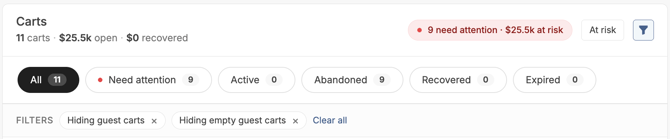
Every Customer, Order, Cart, and Product page now opens with a header showing how many records need attention and the dollar value at risk. The pattern is consistent across all four entities, so merchants get the same answer in seconds no matter which page they open.

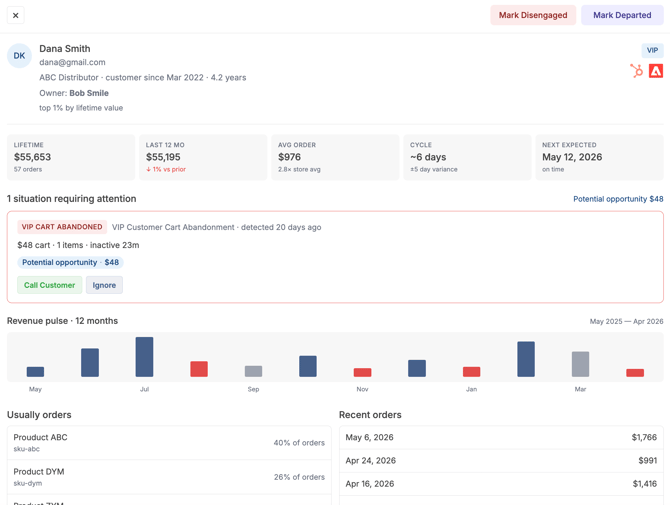
Customer attention states (Inactive, Disengaged, Departed, Churned) What changed: IdealData flags customers as Inactive when their activity drops below their normal pattern. Merchants can manually mark customers as Disengaged or Departed. Truly inactive customers transition to Churned over time. What this means for you: Cleaner customer hygiene with less manual maintenance, and accurate reporting on which customers are actually engaged. Who benefits most: B2B merchants and customer-success-led organizations.
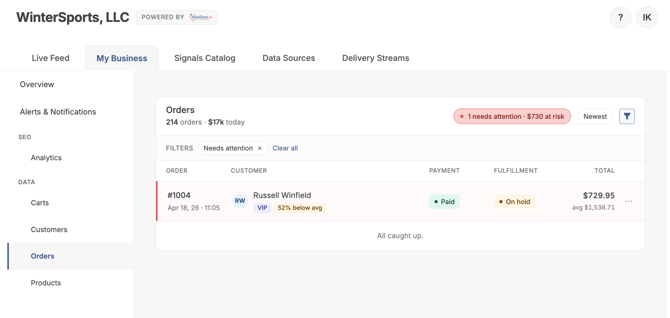
Order attention queue What changed: Orders with holds, payment issues, or fulfillment challenges are now surfaced under "Needs Attention" with the dollar value at risk attached. What this means for you: Stuck orders no longer hide in the queue, and the revenue exposure is visible at a glance. Who benefits most: All merchants, especially high-volume operations.
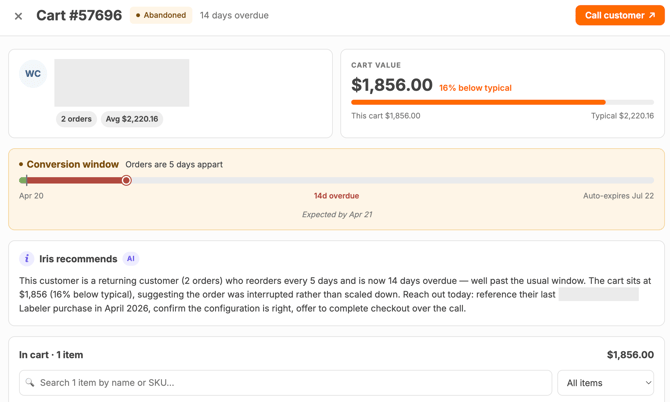
Smarter cart attention What changed: Cart abandonment timeframes are now learned per customer. Carts that were converted or recovered are excluded from the "Needs Attention" count. What this means for you: A clean, accurate view of carts that genuinely need a nudge, without false positives from repeat customers' normal patterns. Who benefits most: B2B merchants and any business with recurring or subscription buyers.
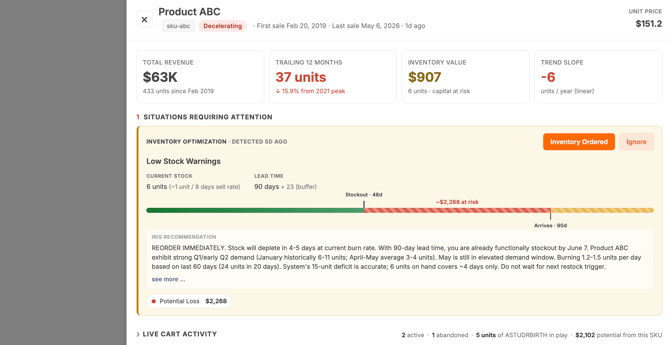
Product attention queue with Lead Time per SKU What changed: Dormant inventory and dead stock SKUs are now surfaced as products needing attention. Merchants can also upload a CSV (SKU + Lead Time in days) so the Low Stock Warning signal reflects actual restock lead times. What this means for you: Capital tied up in non-moving stock becomes visible before quarter-end, and low-stock warnings arrive with enough runway to act on them. Who benefits most: Inventory-heavy and SKU-heavy merchants, and any merchant with long supplier lead times.
HubSpot integration (now generally available)
Self-serve connection What changed: Customers can now connect their HubSpot account directly from the IdealData platform in a few clicks. What this means for you: No setup engagement required to start routing signals through HubSpot. Who benefits most: Any merchant using HubSpot as their CRM.
B2B sales rep notifications What changed: When a signal fires for an account with a HubSpot owner, the assigned rep is notified. What this means for you: Account-level signals reach the right person without manual routing. Who benefits most: B2B teams with named account ownership.
"Call Customer" action What changed: The previous manual "Customer Called" log has been replaced with a "Call Customer" action that opens HubSpot ready to dial. What this means for you: One-click outreach directly from any signal alert. Who benefits most: Sales-led B2B organizations.
Quick links to source records What changed: Signals now include direct links back to the related record in Adobe Commerce, Shopify, and HubSpot, covering orders, customers, contacts, and catalog products. What this means for you: Faster context-switching between signal and source data. Who benefits most: All merchants.
Behind the scenes
Status accuracy and reliability What changed: Improved Magento order status labeling (Cancelled and Voided are no longer shown as Failed), Adobe Commerce inventory sync now catches stock changes that previously slipped through, more resilient integration syncs under rate limits, and several smaller UI corrections. What this means for you: Cleaner data, more trustworthy availability signals, and fewer interruptions to your signal feed. Who benefits most: All merchants, especially those running on Adobe Commerce and Magento.
Coming soon
Shopify integration (Closed Beta) What changed: A closed beta is underway with a small group of Shopify merchants. Real-time cart event support and GDPR compliance are in place. What this means for you: If you run on Shopify and want early access, contact your IdealData team. Who benefits most: Shopify-based merchants.
Questions? Contact our IdealData team.